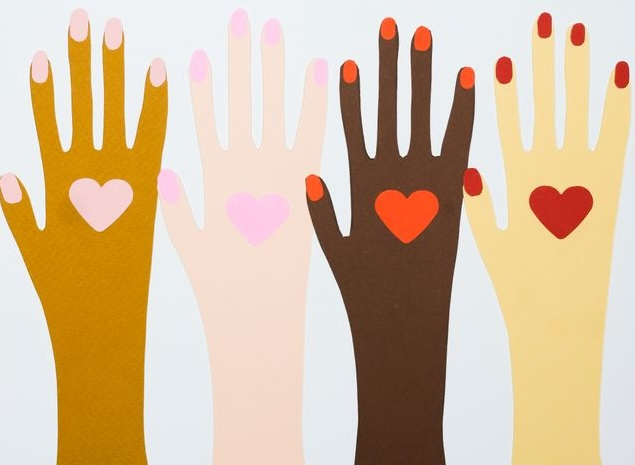
Many know Singapore as a highly diverse country. It comprises people of different ethnicities and cultures: Chinese, Malays, Indians, and well…”Others” – which is what I’m officially classified as.
According to the Singapore Department of Statistics, “Others” encompasses Eurasians, Europeans, Arabs, Japanese, Filipinos, Caucasians, Thais, and several other ethnic groups. Does that make me part of a minority group in Singapore? Technically, I suppose so.
Based on figures found on Wikipedia, the ethnic breakdown is roughly:
- Chinese – 75.5%
- Malay – 15.5%
- Indian – 7.6%
- Others – 1.8%
With Singapore’s population now a little over six million (as of June 2025), and based on the highly sophisticated mathematics that I’m capable of, I am one of just over 100,000 “Other” people in Singapore.
Do I feel special?
No comments.
Now here’s something people sometimes overlook. Each major ethnicity can be further broken down into more specific ethnic groups. Under the Chinese community, for example, you’ll find Hokkiens, Teochews, Cantonese, Hakkas, and so on. Malays and Indians have their own sub-groups too.
But “Others”?
We’re essentially just…everybody else.
Not surprisingly, Filipinos make up one of the largest groups within the “Others” category, followed closely by Caucasians and Eurasians.
On a side note, I used to wonder why I couldn’t be classified as Eurasian myself. I have Spanish ancestry on my mother’s side and Chinese ancestry on my father’s. European plus Asian equals Eurasian, right?
Apparently not.
Spain’s long and rather colourful history with the Philippines makes the answer far more complicated than my simple equation. Long story short, Eurasian I am not.
(Shout-out to the 2026 FIFA World Cup champions, Spain. I wasn’t expecting to sneak football into this post, but here we are.)
Ironically, I’ve often been mistaken for Eurasian, which I actually think is pretty cool. Many of the Eurasians I’ve met happen to be among the most relaxed and easy-going people in my social circle.
But on to the point of this post.
Every year on July 21, Singapore commemorates Racial Harmony Day. Introduced in 1997, it remembers a darker chapter in the nation’s history. In 1964, a series of communal riots between the Malay and Chinese communities claimed lives, injured many more, and deepened the political and social tensions of the time. Those events became part of the complex circumstances that eventually led to Singapore’s separation from Malaysia a year later.
I’m pretty sure all this was covered during my history lessons in school, but if I’m being honest, Geography was a far more interesting subject back then.
If you’d like to read more about the 1964 racial riots, Singapore has a good overview on the SG101 website.
Despite this annual commemoration, Singapore still experiences race-related disputes from time to time. Thankfully, nothing on the scale of 1964, but prejudice and misunderstandings haven’t completely disappeared. Social media certainly doesn’t help, often amplifying conflicts that might otherwise have fizzled out quietly.
While the authorities continue to manage such incidents, I’m glad schools continue to place importance on Racial Harmony Day. Students don’t get a public holiday, but they do participate in activities that teach the value of respecting different races, cultures, and religions.
It’s a sensible approach.
Now if only parents continue those conversations once the children get home.
Overall, I think Singapore is doing fairly well on the diversity front. Of course, there’s always room for improvement.
My broken Mandarin still earns me puzzled looks from the Chinese aunties at the market.
I delight my Malay friends by pointing out words that sound almost identical in Malay and Filipino.
The only Tamil words I know are the ones I’ve been scolded for accidentally saying.
And whenever someone cheerfully asks me, “You’re off day today?”, I simply nod and smile.
I think tolerance is key.
Not just tolerating different races, but different accents, languages, customs, food, beliefs, and yes…occasionally terrible Mandarin.
After all, we don’t have to understand everything about one another to live alongside each other respectfully.
And as for me?
I still don’t mind being mistaken for Eurasian.
Leave a Reply